9 Colorado Service Areas · Available 24/7

Mold Removal & Remediation in Colorado

Call us anytime to connect with independent local providers for mold inspection, containment, black mold removal, and structural drying across nine Colorado communities.

Mold Remediation Overview

A2B Solutions Inc. is an independent Colorado referral and call-connection website. Call (970) 295-0453 anytime to connect with an independent local mold remediation provider across Evans, Greeley, Windsor, Loveland, Wellington, Superior, Cañon City, Gunnison, and Crested Butte. Provider availability, testing options, and scheduling vary by ZIP code—confirm licensing, scope, and written pricing directly before work starts.

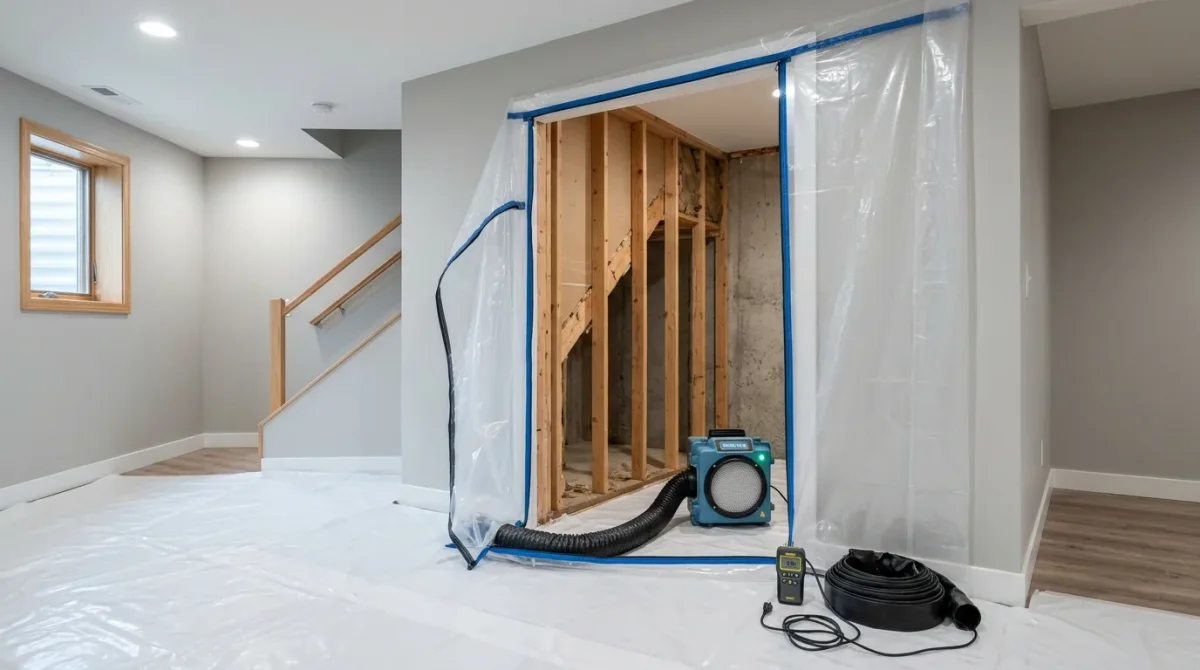
Residential basement containment sheeting, HEPA air scrubber, and moisture meter setup for mold inspection and remediation
Containment sheeting, HEPA air scrubber, and moisture meter setup. Independent providers confirm site-specific scope.

01

24/7 Phone Support

Our phone support is answered day, night, weekends, and holidays to help connect you with an independent Colorado mold provider. On-site inspection and testing schedules vary by provider and ZIP code.

02

Direct Referral to Local Providers

One phone call connects you with independent local restoration specialists serving nine Colorado communities. Provider availability and arrival times vary by ZIP code and local demand.

03

Insurance Claim Documentation Support

Independent local remediation pros typically document moisture meter readings, photos, and containment scopes. Whether mold work is covered always depends on your specific insurance policy and insurer determination.

Complete Mold Remediation Scope

Mold Removal & Remediation Services in Colorado

Whether you discovered damp drywall after a basement leak or need a dependable mold remediation provider for containment and moisture control, one call connects you with an independent local contractor serving your Colorado town.

Mold Inspection

Visual and moisture-meter walkthroughs of basements, crawlspaces, attics, bathrooms, and wall cavities to locate active growth and trace its underlying water source.

Mold Testing (When Needed)

Optional air or surface sampling coordinated through qualified local providers when hidden mold is suspected behind walls or when third-party clearance is requested. Per U.S. EPA guidance, visible mold growth usually does not require lab testing before fixing the moisture source.

Black Mold Removal

Containment barriers, negative air pressure, and safe removal of dark indoor mold colonies without dispersing spores into unaffected living spaces.

Mold Remediation

HEPA vacuuming, controlled removal of unsalvageable porous drywall or carpeting, surface treatment of framing, and HEPA air scrubbing performed by independent specialists.

Mold Prevention & Structural Drying

Commercial dehumidification and practical moisture-control guidance focused on stopping the underlying leak so cleaned framing stays dry.

EPA-Aligned Remediation Guidance

Understanding Dark Mold & When Testing Is Actually Useful

Following U.S. Environmental Protection Agency (EPA) homeowner guidance helps you avoid unnecessary lab fees and focus immediately on safe containment and fixing the moisture source.

Dark Color Alone Does Not Identify Mold Species

Many common household molds appear dark green, gray, or black. Color by itself cannot confirm species or health risk—any active indoor mold growth should be treated cautiously with proper containment and moisture control rather than scrubbed dry or sprayed with household bleach.

Visible Mold Rarely Requires Lab Sampling First

Per U.S. EPA guidance, if visible mold growth is already present, air or surface lab sampling is generally unnecessary before remediation. The first priority is stopping the leak, containing affected porous materials, and drying framing thoroughly. Sampling is mainly helpful when hidden growth is suspected behind closed walls or when formal clearance documentation is requested.

How Mold Removal & Remediation Works

Four steps from your call to inspection, containment, removal and drying verification.

  1. 01

    Call us anytime

    Dial (970) 295-0453 anytime. Share your Colorado town, ZIP code, and where you noticed musty odors, staining, or dampness to connect with an independent local mold provider.

  2. 02

    Inspection & Moisture Check

    An independent specialist inspects affected rooms and uses moisture meters to locate hidden dampness behind baseboards, drywall, or subfloors and review written terms directly.

  3. 03

    Containment & Removal

    Once authorized by you, technicians erect polyethylene barriers, run HEPA air scrubbers, and safely remove compromised porous materials without spreading spores.

  4. 04

    Drying & Prevention

    Commercial dehumidifiers bring structural framing back toward dry baseline standards, paired with moisture-source guidance so mold is far less likely to return.

Mold After Water Damage

Mold Often Starts Right After Water Damage

Even in Colorado’s dry climate, indoor mold spores can colonize damp drywall, carpet backing, and basement framing. EPA recommends drying wet materials within 24–48 hours where feasible after a burst pipe, roof leak, or basement flood. Surface fans alone rarely pull trapped moisture out of wall cavities.

Because lasting mold remediation depends on eliminating the underlying water source first, addressing active leaks immediately is critical. Explore our Colorado water damage restoration hub, our local town water guides, or our EPA-informed guide on preventing mold after water damage.

All 9 Colorado Service Areas

Mold Removal Areas We Serve Across Colorado

Select your Colorado town below for local mold inspection, containment, and remediation information.

Weld County · ZIP 80620

Mold Removal in Evans, CO

Home base in Weld County along the South Platte corridor, serving ranch homes, newer subdivisions, and commercial spaces 24/7.

Weld County · ZIPs 80631, 80634

Mold Removal in Greeley, CO

Serving historic neighborhoods near downtown and UNC, west Greeley subdivisions, and local commercial properties day and night.

Weld & Larimer Counties · ZIP 80550

Mold Removal in Windsor, CO

Prompt water and fire mitigation around Windsor Lake, Water Valley, Highland Meadows, and growing residential corridors.

Larimer County · ZIPs 80537, 80538

Mold Removal in Loveland, CO

Emergency water extraction and smoke cleanup along the Big Thompson corridor, Lake Loveland, Centerra, and west foothills.

Larimer County · ZIP 80549

Mold Removal in Wellington, CO

Fast water extraction and smoke restoration along the I-25 corridor in Wellington ZIP 80549, built for high-plains weather extremes.

Boulder County · ZIP 80027

Mold Removal in Superior, CO

Responsive water mitigation and smoke restoration for Rock Creek, Original Town, and modern hillside homes in Superior.

Fremont County · ZIP 81212

Mold Removal in Cañon City, CO

Emergency water removal and fire cleanup across Canon City, the Arkansas River valley, historic downtown, and canyon-rim homes.

Gunnison County · ZIP 81230

Mold Removal in Gunnison, CO

Built for extreme sub-zero high-country winters, frozen pipe bursts, spring snowmelt flooding, and heating-fire cleanup in Gunnison.

Gunnison County · ZIP 81224

Mold Removal in Crested Butte, CO

High-altitude water extraction, ice-dam leak drying, and alpine fire/smoke cleanup for Crested Butte and Mt. Crested Butte homes.

Signs of Mold & Hidden Moisture in Colorado Properties

Colorado’s dry outdoor climate does not eliminate indoor moisture problems. Localized condensation, leaking plumbing and poorly dried building materials can support mold growth even when the rest of the property feels dry.

Visible staining and recurring musty odors

Dark, green or pale patches, peeling paint and persistent musty smells can warrant investigation. Color or odor alone does not establish species or health risk. Check for leaks and have concealed or extensive moisture assessed.

Basements and crawl spaces

Groundwater seepage, sump pump failures, unsealed ground and condensation can keep lower-level framing or insulation damp. Recurring moisture needs a drainage, ventilation or plumbing solution as well as cleanup.

Attics, roofs and bathrooms

Roof leaks, ice dams, inadequate exhaust and condensation may leave sheathing, insulation or wall cavities damp. Ask a qualified provider to assess the underlying moisture pathway and appropriate repairs.

Behind drywall and beneath flooring

Moisture can remain trapped after a burst pipe or appliance leak. A moisture meter and, where appropriate, thermal imaging can guide further inspection; neither alone identifies mold species or proves a surface is safe.

Moisture meter inspection at a basement baseboard
Mold growth behind basement drywall and exposed framing
Mold staining on attic framing before treatment
Attic framing after mold remediation

Reference photographs: iDry Columbus, Ohio, CC BY 4.0. Cropped for display; third-party examples, not A2B or Colorado projects. Images are not verified matched views of one property.

Residential & Commercial Mold Remediation

The work plan depends on affected materials, size, moisture source, building occupancy and potential contamination. Independent providers confirm their capabilities before beginning.

Homes, rentals and multifamily properties

Bathrooms, basements, closets and concealed wall cavities are common areas to investigate. Renters should notify the property manager. Ask how occupants, belongings and clean rooms will be protected during work.

Offices, restaurants and commercial buildings

Commercial spaces may require coordinated access, containment, protection of inventory and work scheduling. Consult the provider about HVAC involvement, occupant safety, documentation and safe reoccupation before restarting operations.

Porous materials and structural framing

Mold-affected drywall, insulation and carpet may require removal if they cannot be adequately cleaned. Qualified providers evaluate salvageable hard surfaces and framing, correct the moisture source and verify that materials are dry before repair.

Mold Removal vs. Remediation & When to Seek Help

Removal addresses affected material; remediation includes controlling moisture, appropriate cleaning and preventing recurrence. The aim is a clean, dry building, not a claim that all naturally occurring spores have been eliminated.

Small visible areas

EPA guidance indicates that many isolated areas under roughly 10 square feet can be handled by homeowners when the water source is corrected and conditions are suitable. Larger areas, extensive water damage, sewage, HVAC contamination or uncertainty warrant qualified assessment.

Testing and inspection

Visible growth generally does not require sampling before addressing moisture and cleanup. A qualified assessor may recommend sampling for specific questions, hidden contamination or documented verification. No universal indoor mold concentration establishes safety.

Containment, cleaning and verification

A provider may use containment barriers and HEPA filtration to limit particle spread, remove unsalvageable material and clean suitable surfaces. Verify correction of the leak, absence of visible growth and musty odors, and adequate drying before rebuilding.

Health and occupant precautions

Mold can irritate airways and may aggravate allergies or asthma. Avoid disturbing extensive growth; individuals with health concerns should consult a healthcare professional about exposure. Seek qualified help for contaminated floodwater or suspected HVAC involvement.

Mold Remediation Cost, Timeline & Insurance in Colorado

The price of professional mold cleanup depends on the actual scope, not just the size of a visible patch. Ask an independent provider for a written estimate after assessment.

What determines the cost?

Affected square footage, hidden cavities, containment, access, material removal, filtration, drying and reconstruction can influence the total. Ask which items are included and whether inspection, testing and clearance are separately priced.

How long does remediation take?

An isolated area may be addressed more quickly than a large crawl space, attic or multi-room loss. Ongoing leaks, drying needs and material repairs can extend work. Completion should depend on moisture and cleanup verification, not a fixed deadline.

Will insurance cover mold removal?

Coverage varies by policy, cause of moisture, exclusions and endorsements. Some policies limit mold related to a covered sudden water loss. Ask your insurer about the claim requirements, and request itemized estimates, photos and moisture records when available.

Preventing mold from returning

Repair leaks and drainage issues, ventilate bathrooms and kitchens appropriately, monitor damp areas and dry water-damaged materials promptly when safe. EPA recommends keeping indoor humidity below 60 percent, ideally between 30 and 50 percent where practical.

Why Call A2B Solutions Inc.?

Call anytime with your Colorado town, ZIP code, property type and damage details to request a connection with an independent local provider. Ask about relevant qualifications, insurance, scope, availability and written pricing before authorizing work.

Mold Removal & Remediation FAQs

Straightforward answers about indoor mold risks, remediation timelines, DIY bleach limitations, and insurance documentation.

Indoor mold can release airborne spores and musty compounds that irritate eyes, sinuses, and airways—especially for children, older adults, or people with asthma or allergies. Ongoing moisture also weakens drywall, subfloors, and framing over time, so fixing the water source and using safe containment is important.

Available 24/7 · 9 Colorado Communities

Suspect Mold or Musty Odors in Your Colorado Home?

Avoid disturbing suspected mold without proper containment. Call us anytime at (970) 295-0453 to connect with an independent local Colorado mold remediation provider.

For active fires or life-safety emergencies, call 911 immediately.

Call Now: (970) 295-0453