1. Shut Off the Main Water Supply Immediately
A single split half-inch supply pipe can release several gallons of pressurized water every minute. Before grabbing towels or moving furniture, go straight to your home’s main water shutoff valve and turn it completely off. In most Colorado homes, the main valve sits along the front foundation wall in the basement, inside the utility room near the water heater, or inside a crawlspace entry where the street line enters the house.
Once the main valve is closed, open the lowest cold-water faucet in the house—such as a basement utility sink or downstairs tub—and flush a toilet once. Relieving leftover pressure inside the plumbing lines slows down how much residual water keeps draining through the break into your ceiling or floor.
If the burst happened in a hot-water line or near your water heater, turn off the power breaker or switch the gas valve on the water heater to the pilot or off position so the tank does not overheat while partially drained.
2. Call for 24/7 Emergency Water Extraction Right Away
Dealing with burst pipe water damage is a race against absorption. Within the first hour, water wicks upward into drywall paper, saturates carpet padding, and runs underneath hardwood seams and kitchen toe-kicks. Waiting until morning or relying on a small wet-dry shop vacuum leaves trapped moisture inside wall cavities where swelling and mold begin.
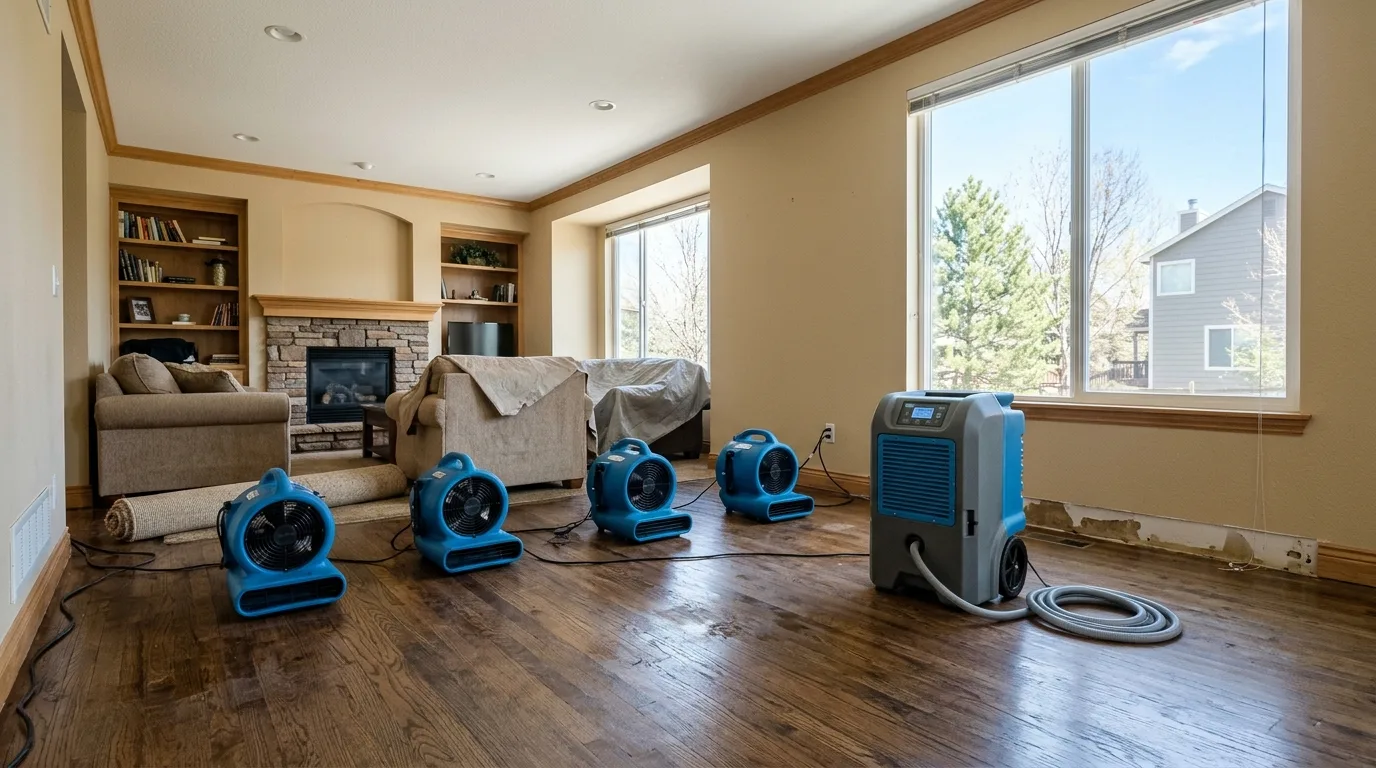
Calling a local restoration dispatch line right away gets commercial truck-mounted extractors, axial air movers, and low-grain refrigerant dehumidifiers on the way before water migrates into adjacent rooms. You should also arrange a licensed plumber to repair the split pipe section itself, while restoration crews handle water removal and structural drying.
- Keep your town and ZIP code ready when you call so local crews can route directly.
- Mention which floor the burst occurred on and whether water is dripping through ceilings.
- Note whether the main shutoff valve is fully closed or still slowly seeping.
3. Take Clear Photos and Videos Before Moving Belongings
Before rolling up wet area rugs or hauling damp cardboard boxes out of the basement, take two minutes to walk through every affected room with your phone camera. Capture wide shots showing the full room layout first, then take close-up photos of the burst pipe area, standing water depth, soaked baseboards, ceiling stains, and any wet furniture or electronics.
Insurance adjusters rely heavily on clear initial documentation showing both the sudden source of the leak and the exact footprint of water spread. Keep a simple written timeline noting what time you discovered the leak, when you shut off the main valve, and when you called for mitigation.
Never throw away damaged flooring scraps, wet carpet padding, or broken pipe fittings until your adjuster or restoration crew confirms they have been photographed and logged.
4. Stay Away From Electrical Outlets, Panels, and Appliances
Standing water and household electricity are a dangerous combination. Never wade into a flooded basement or wet laundry room if water has reached floor-level electrical outlets, extension cords, space heaters, or the base of your furnace or washer.
If your main breaker panel is located in a dry area—such as an attached garage or dry upstairs hallway—flip off the individual breakers serving the wet rooms. If you have to walk through standing water to reach the electrical panel, do not attempt to touch it. Stay clear and wait for a qualified electrician or emergency responders to verify safety.
- Do not plug in household vacuum cleaners, box fans, or hair dryers on wet carpet.
- Avoid standing underneath sagging, water-heavy drywall ceilings that could collapse without warning.
- Keep children and pets completely out of wet areas until power and hazards are verified.
5. Why Professional Drying and Cleanup Prevent Secondary Damage
Even after visible puddles are pumped out, structural wood framing, subfloors, and insulated wall cavities hold bound moisture tightly. In Colorado’s freeze-prone climate—especially across Weld County, Larimer County, and mountain valleys—winter pipe bursts often soak insulated exterior walls where passive air circulation cannot reach.
Professional restoration specialists map hidden damp pockets with non-invasive moisture meters, remove unsalvageable wet carpet padding or flooded baseboard trim where necessary, and balance commercial dehumidifiers with directed air movers over several days. Daily moisture readings confirm that framing returns to safe dry standards so buckled floors and post-leak mold do not appear weeks later.
If you are dealing with active water right now, review our Colorado water damage restoration services or our Evans emergency water removal guide for immediate local dispatch.