1. Why the First 24 to 48 Hours Decide Whether Mold Grows
Microscopic mold spores exist naturally in indoor and outdoor air everywhere—even in arid Colorado towns like Evans, Greeley, and Canon City. Spores remain dormant until they land on a damp organic surface such as drywall paper, wood framing, carpet backing, or cardboard.
Once a burst pipe, flooded basement, or roof leak supplies steady moisture, dormant spores can germinate and begin colonizing damp materials within 24 to 48 hours. Because mold feeds directly on cellulose inside drywall and timber, stopping water absorption and dropping structural moisture quickly is the single most effective way to prevent mold after water damage.
Leaving wet carpet down overnight or closing a damp basement door to hide the mess traps humid air right against baseboards and framing—turning a clean water leak into a costly mold remediation job within days.
2. Commercial Dehumidifiers vs. Household Box Fans
Many homeowners set up two or three household box fans after a leak and assume the room is safe once the carpet surface feels dry to the touch. In reality, blowing air across wet flooring without capturing moisture from the room simply lifts humidity into the air, where it condenses onto cool basement walls, ceiling drywall, and closet woodwork.
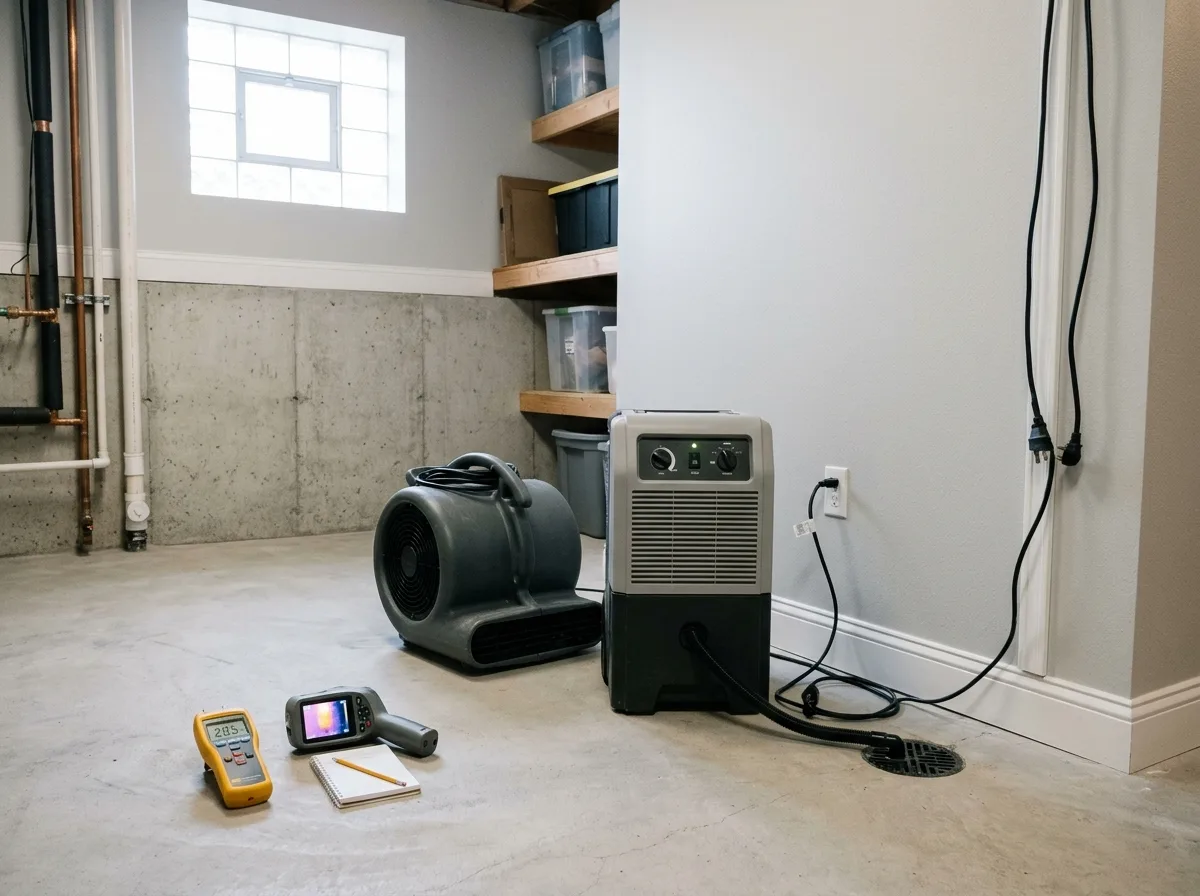
True structural drying pairs directed high-velocity air movers with commercial low-grain refrigerant (LGR) dehumidifiers. Air movers push bound moisture out of subfloors and framing, while LGR dehumidifiers pull gallons of moisture out of the air continuously—even at lower basement temperatures where standard retail dehumidifiers struggle.
- Pull wet area rugs, soaked cardboard boxes, and damp upholstered items out of affected rooms promptly.
- Keep interior temperatures steady and avoid cranking heat excessively high, which can accelerate microbial growth in damp pockets.
- Verify dryness inside baseboards and framing with a moisture meter rather than relying on touch alone.
3. Early Warning Signs That Hidden Mold Has Started
Hidden mold rarely starts in the middle of an open living room wall. It usually begins behind baseboards, under bathroom vanities, inside finished basement cavities, or underneath carpet padding where air does not circulate. Catching early warning signs keeps remediation scope contained and manageable.
Pay close attention to persistent earthy or musty odors that linger days after a leak was cleaned up—especially when the furnace kicks on or when you walk downstairs in the morning. Visual clues include faint grey, green, or dark speckles near floor trim, peeling or bubbling paint, warped baseboards, or unexplained sneezing and throat irritation inside specific rooms.
- Musty or damp-earth smells around closets, crawlspace hatches, or finished basement walls.
- Discoloration, fuzzy spots, or dark rings spreading along drywall seams and ceiling corners.
- Peeling wallpaper, swollen trim boards, or damp condensation on cool basement concrete.
4. What Not to Do If You Spot Suspected Mold
If you peel back a damp baseboard or look behind a utility sink and see dark mold patches, resist the urge to spray household bleach and scrub aggressively. Bleach is mostly water; on porous drywall or wood framing, the surface chlorine evaporates while leftover water penetrates deeper and can actually leave behind more moisture for regrowth.
Likewise, do not aim household fans directly at visible mold colonies or run central HVAC vents through an affected room without containment. High airflow blasts loose spores into clean bedrooms, closets, and ductwork throughout the rest of your home.
5. When to Call a Local Restoration or Mold Specialist
Call a restoration professional right away whenever water has soaked wall cavities, finished basements, subfloors, or multi-room carpeting—or whenever musty smells or visible mold cover more than a tiny surface patch on tile. Local specialists inspect hidden moisture with meters, set up sealed negative-air containment with HEPA filtration, remove unsalvageable wet materials safely, and dry structural framing completely.
Once framing and subfloors are verified dry, take a few simple prevention steps around your Colorado property: extend downspouts at least six feet away from foundation walls, verify that bathroom and laundry exhaust fans vent outdoors rather than into the attic, keep basement relative humidity below 50 percent, and schedule seasonal checks on sump pumps and crawlspace vapor barriers before spring snowmelt arrives.
Explore our Evans and Colorado mold removal hub or our water damage restoration hub if you need immediate drying or inspection before a small leak becomes a bigger indoor air issue.