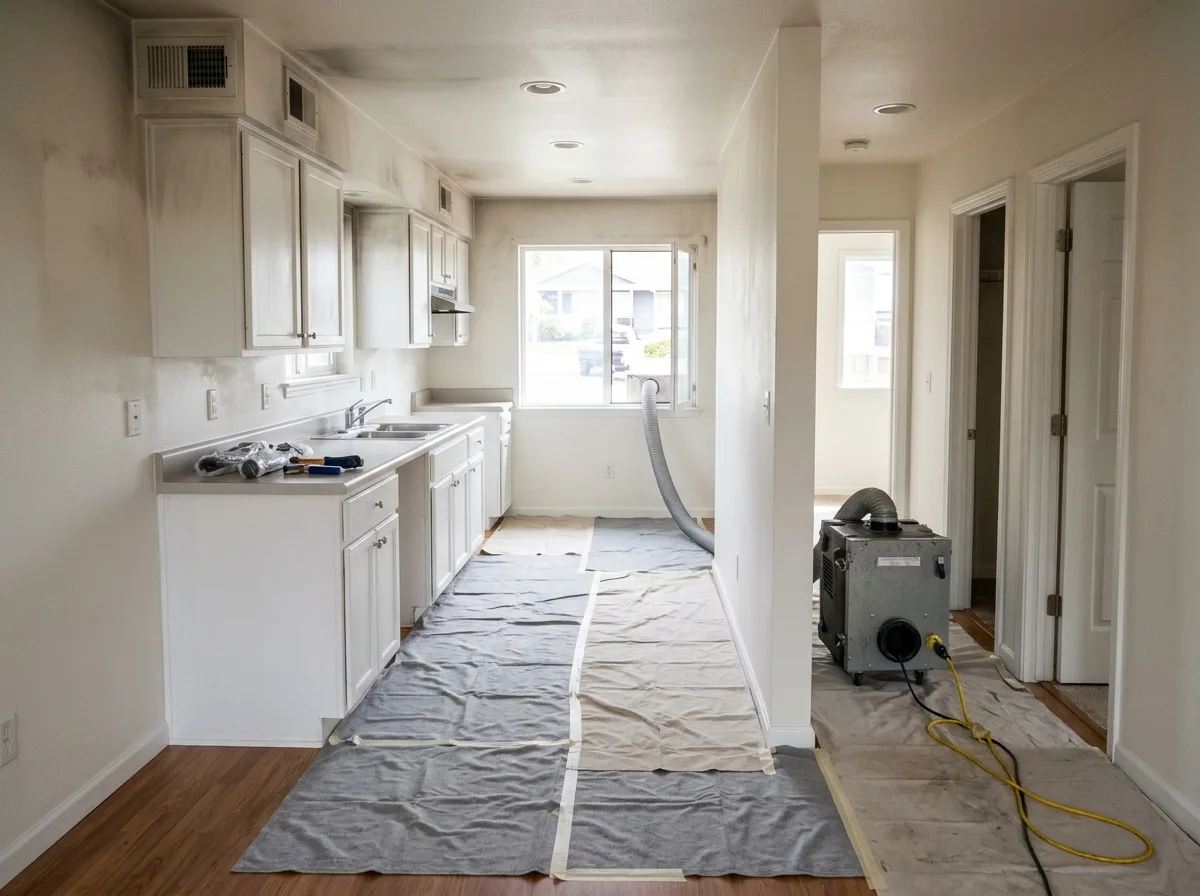
1. Why Smoke Smells Keep Coming Back Weeks After a Fire
Even after a localized stovetop grease fire or fireplace puff-back is extinguished, intense heat expands pores inside painted drywall, unfinished wood framing, grout lines, carpets, and upholstery. Microscopic smoke particles rush deep into those opened pores—and as the room cools down, the pores tighten and trap odor molecules inside.
That is why perfumed sprays, scented candles, and bowls of vinegar only mask smoke odor briefly. As indoor humidity rises or your heater warms the walls days later, trapped soot and smoke compounds re-release into the air. Permanently removing smoke smell after a fire requires extracting the physical soot residue and neutralizing airborne odor molecules at their source.
2. Safe Ventilation and Turning Off Your Central HVAC System
Always wait until the local fire department explicitly clears your home for re-entry before stepping inside. Once cleared and safe, your first move is keeping your central furnace, air conditioner, and ceiling fans turned completely off. Running forced-air equipment pulls soot and ash into return grilles and coats clean ductwork, spreading smoke smell into every bedroom.
If outdoor air is dry and clear—and no active wildfire smoke is drifting outside—opening windows on opposite sides of the affected room can help release trapped airborne haze temporarily. However, avoid running high-speed fans directly across heavy soot piles, which kicks fine acidic ash deeper into carpets and light fixtures.
- Change clogged HVAC air filters only after ductwork and returns are inspected and cleared.
- Keep interior doors closed between smoke-affected rooms and unaffected bedrooms.
- Wear protective gloves and an N95 mask if briefly retrieving essential medications or documents.
3. Cleaning Smoke-Coated Surfaces Without Making Stains Permanent
Different fires leave dramatically different residues. Fast-burning paper and wood create dry, powdery soot, while cooking grease fires produce invisible, sticky protein film, and burning plastics or foam leave heavy oily smears. Using standard soap and water on dry or oily soot almost always drives dark pigment permanently into flat wall paint, stone fireplaces, and bare woodwork.
Professional fire restoration crews match the cleaning method to the exact residue—starting with dry HEPA vacuuming (without touching bristles against walls) and dry chemical vulcanized rubber sponges before applying targeted degreasing solutions to cabinetry, counters, and hard fixtures.
Soft porous textiles such as drapes, bedding, and upholstered cushions absorb smoke deeply and often require specialized off-site laundering or deodorization rather than standard home washing cycles, which can set smoke odors into synthetic fibers.
4. HEPA Air Scrubbing, Thermal Fogging, and Hydroxyl/Ozone Deodorization
Once physical soot and charred debris are removed from walls, ceilings, and trim, professional odor removal addresses the microscopic particles trapped inside porous structure and air. Restoration crews deploy commercial HEPA air scrubbers equipped with activated carbon filters to pull fine particulate smoke and volatile odors out of indoor air continuously.
For deeply embedded odors inside framing, attics, or wall voids, specialists use targeted deodorization technologies such as hydroxyl generators, controlled ozone treatment (performed only in unoccupied, sealed spaces), or thermal fogging that mirrors how hot smoke originally penetrated crevices. Finally, applying odor-blocking shellac or specialized sealant primers before repainting locks away any residual odor permanently.
5. When Professional Fire and Smoke Restoration Is Essential
If smoke traveled beyond a single pan on the stove—leaving haze on ceilings, greasy kitchen film, soot in hallways, or strong smells inside closets and vents—calling local fire restoration specialists right away saves salvageable finishes from permanent acidic corrosion. Waiting allows soot to pit chrome hardware, etch glass, and yellow white cabinetry within days.
Before turning your furnace back on or repainting smoke-stained walls, ask your local restoration contractor to inspect return plenums, registers, attic hatches, and insulation near the burn zone. Sealing clean framing with an odor-blocking primer and cleaning soot-contaminated ductwork ensures campfire smells do not return every time Colorado winter heat kicks on.
A2B Solutions Inc. connects homeowners across Evans, Greeley, Windsor, Loveland, Superior, and all nine of our Colorado service areas with 24/7 fire and smoke cleanup pros. Explore our Colorado fire damage restoration hub or your local town fire page to start safe stabilization right away.